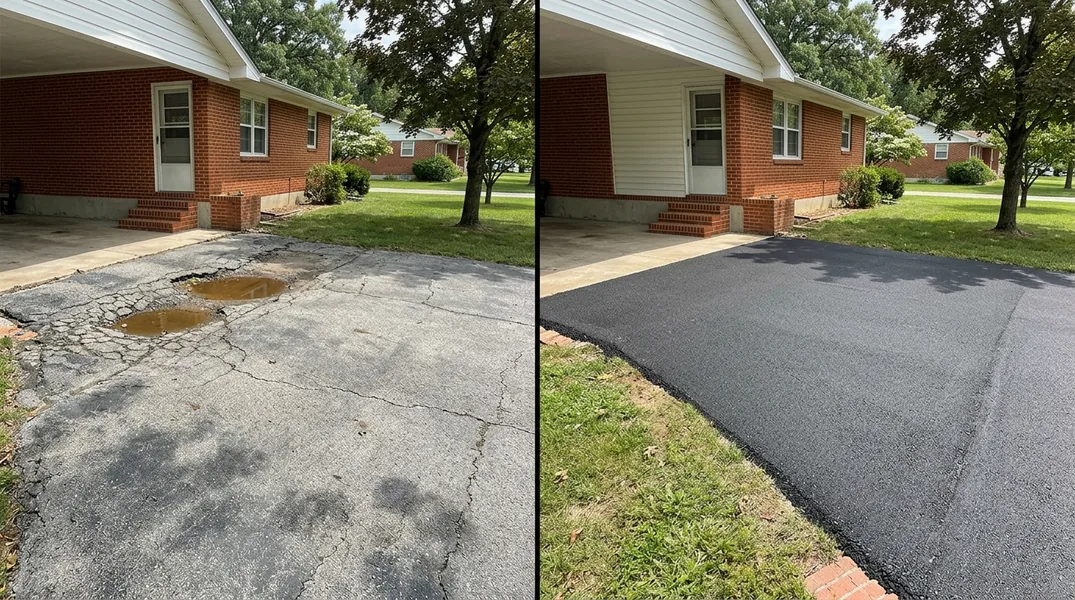
Why Springfield Driveways Face Unique Drainage Challenges
If you live in Springfield or the surrounding Ozark region, you know that our landscape is unlike most of the country. The Ozarks sit atop a unique geological foundation characterized by red clay soil and karst topography, a combination that creates serious water management headaches for homeowners with driveways.
Red clay, common throughout the Springfield area, is notoriously poor at absorbing water. When rain falls, instead of soaking into the ground, water sits on the surface or pools in low spots. Karst terrain, formed by the dissolution of limestone beneath the soil, creates sinkholes, underground caverns, and unpredictable drainage patterns. Together, these geological features mean that water pooling on driveways is not just a cosmetic issue in our region, it's a structural threat to your asphalt investment. Standing water accelerates pavement deterioration, leading to cracks, potholes, and premature failure that could have been prevented with proper driveway drainage solutions.
Understanding Water Pooling on Your Driveway
Water pooling on driveways happens when the surface cannot shed water fast enough or when the underlying soil cannot absorb it. In Springfield, this problem is magnified because our red clay base repels water rather than accepting it. Every time it rains, homeowners with poor drainage watch puddles form and linger for hours or even days, depending on the slope and soil conditions beneath the asphalt.
This is more than an inconvenience. Standing water seeps into small cracks in the asphalt, freezes during winter, and expands, creating larger fractures. These fractures allow more water penetration, which weakens the base layer beneath your driveway. Over time, you end up needing Pothole Repair & Asphalt Patching or even full replacement. The cost of addressing drainage problems now is a fraction of the cost of replacing a failed driveway later. If you're noticing water pooling on your driveway, it's time to explore active drainage solutions rather than hoping the problem resolves itself.
Driveway French Drain Systems: A Proven Solution for Red Clay
A driveway french drain is one of the most effective solutions for managing water in areas with poor soil absorption. Unlike traditional drainage, a french drain works by intercepting water before it can pool on your driveway surface. The system consists of a perforated pipe buried in a gravel-filled trench, typically installed along the edges or uphill side of your driveway. Water flows into the gravel, enters the perforated pipe, and is directed away from your property to a safe discharge point.
For Springfield homeowners dealing with red clay, french drains are particularly valuable because they bypass the clay's poor drainage characteristics entirely. Instead of relying on the soil to absorb water, the system actively moves water away from your driveway. This is especially important if your driveway sits in a low spot or if you have a sloped property where water naturally runs toward your home. When installed correctly by experienced professionals, a driveway french drain can eliminate water pooling for decades. The key is proper slope calculation, correct pipe sizing, and strategic placement to intercept water before it reaches your asphalt surface.
Trench Drain Driveway Systems: When You Need Industrial-Strength Drainage
A trench drain driveway system is a more heavy-duty approach to water management, ideal for driveways that experience significant water flow or are positioned in particularly challenging locations. Unlike a french drain, which works passively, a trench drain is a visible channel system installed across or along your driveway that actively captures water and directs it away. These systems use grates or covers that blend with your asphalt surface while allowing water to flow through into an underground drainage pipe network.
Trench drains are especially useful in the Ozarks where karst features can create unpredictable water movement. If you have a driveway that sits at the bottom of a hill, receives runoff from a larger property, or has experienced recurring water damage, a trench drain may be the solution. The system can handle high-volume water events that might overwhelm a french drain. When you're ready to explore whether a trench drain driveway system makes sense for your property, Springfield Asphalt Paving can assess your specific situation and recommend the best approach. Call us at (417) 363-3550 to discuss your drainage challenges.
Proper Slope and Grading: The Foundation of Driveway Drainage Solutions
Before investing in complex drainage systems, it's important to understand that the most fundamental driveway drainage solution is proper slope and grading. A correctly installed driveway should slope away from your home and any structures, typically at a grade of 1 to 2 percent. This means for every 100 feet of driveway length, the surface should drop 1 to 2 feet in elevation. This gentle slope is often enough to prevent water pooling on driveways in normal conditions, though it may not be sufficient in areas with poor soil absorption like our red clay region.
When Springfield Asphalt Paving installs Asphalt Driveway Paving & Installation, we pay careful attention to grading from the start. However, many existing driveways in the area were installed without adequate slope or have settled over time, eliminating the slope they once had. If your driveway was constructed on the flat or has settled, water pooling becomes inevitable. In these cases, you may need Asphalt Resurfacing & Overlay to restore proper grading, combined with a french drain or trench drain system for additional protection.
Choosing the Right Drainage Solution for Your Springfield Property
The best driveway drainage solution depends on several factors unique to your property: the severity of your water pooling problem, the slope of your land, the size of your driveway, and your budget. A small driveway with minor pooling in one corner might be solved by improving grading alone. A large driveway in a low spot with significant water flow may require both a french drain and improved surface slope. The only way to know for certain is to have a professional evaluation.
Springfield Asphalt Paving has years of experience managing drainage challenges in our specific geological and climate conditions. We understand how red clay and karst terrain affect water movement, and we know which solutions actually work in practice. Rather than recommending the most expensive option, we focus on what will actually solve your problem and protect your investment. To get started, contact us for a free estimate and professional assessment of your driveway drainage situation. We'll evaluate your property, explain your options, and provide honest pricing for the work involved. Call (417) 363-3550 today to schedule your consultation.
Looking for a professional asphalt paving contractor in Springfield? Springfield Asphalt Paving responds fast for all your asphalt paving needs.
Get a Free Quote